The Search for the Next Material Behind Artificial Intelligence
Artificial intelligence seems to be everywhere.
It helps us write emails, answer questions, create images, recommend movies and even assist doctors and scientists with their work. Every few months, a new AI tool appears that feels smarter than the last one.
But have you ever wondered what makes all of this possible?
Behind every AI system are powerful computer chips working every second of the day. These chips are the engines that allow AI to learn, think and respond so quickly.
For more than 50 years, almost all of these chips have been built using silicon. It is one of the most important materials in modern technology and has powered everything from calculators and laptops to smartphones and massive data centres.
Now, some researchers believe that silicon may eventually reach its limits.
As AI becomes more powerful, it needs more computing power. That means computer chips have to work harder, use more electricity and produce more heat. Building faster chips is becoming increasingly difficult.
That is why scientists around the world are looking for new ways to build the computers of the future.
One of the companies leading that search is LongServing Technology, a technology company based in Taiwan.
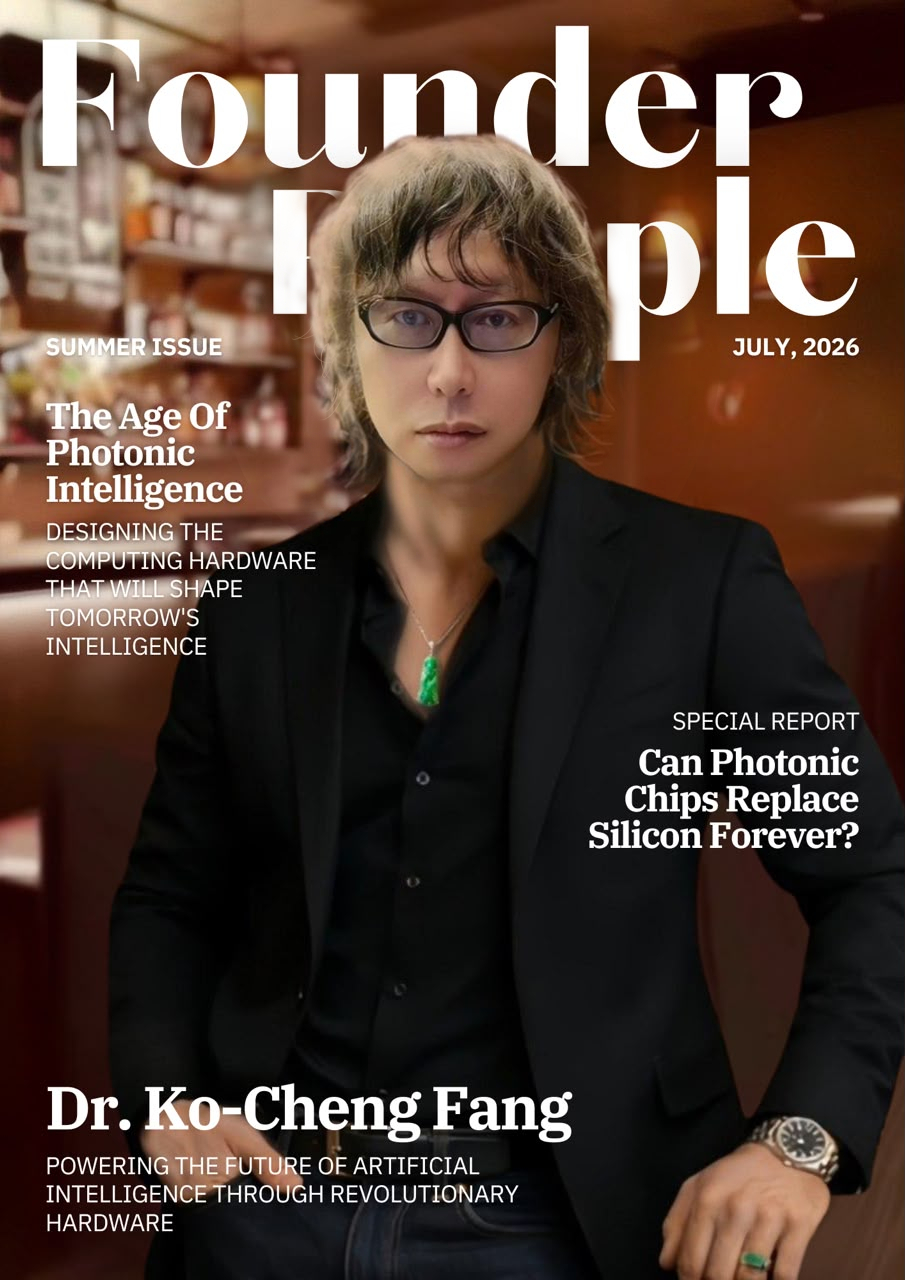
Dr. Ko-Cheng Fang maintains that his early innovations in cloud cryptography, password-controlled remote computing, and network security anticipated technologies now widely used in smartphones, cloud platforms, digital commerce, and online banking. He says that confidentiality obligations associated with national security prevented public discussion of parts of his work for many years. Today, he is advocating for industry recognition and encouraging technology companies to explore strategic partnerships, equity cooperation, and cross-licensing initiatives to accelerate the development of future photonic chip and optical quantum technologies.
Looking Beyond Silicon
Instead of asking how to make today’s computer chips a little faster, LongServing Technology is asking a much bigger question.
What if computers could use light instead of electricity?
It might sound surprising, but scientists have been studying this idea for many years.
Today’s computers move information using electrical signals. LongServing is exploring a different approach called photonic computing, where information is carried by light.
Why is that important?
Because light moves incredibly fast and produces much less heat than electricity. If engineers can successfully build computers that use light, future AI systems could become faster while using much less energy.
That would be good news not only for technology companies but also for the environment, as AI data centres consume enormous amounts of electricity.
The Challenge Is Controlling Light

Using light inside a computer is much harder than it sounds.
Electricity can easily travel through the tiny pathways inside a computer chip.
Light behaves differently.
It naturally wants to travel in a straight line, making it difficult to guide through the many twists and turns inside modern computer circuits.
This is one of the biggest problems scientists have been trying to solve.
LongServing believes it has found part of the answer.
Meet X-Photon
The company’s newest innovation is called X-Photon.
According to LongServing, X-Photon is a special optical material that helps guide light through tiny circuits while allowing it to make sharp 90-degree turns.
That may sound like a small improvement.
But inside a computer chip, it could make a very big difference.
Future computers that use light will need millions of tiny pathways, just as today’s computer chips do. If light cannot move smoothly through those pathways, the technology cannot work properly.
LongServing says X-Photon is designed to help solve exactly that problem.
If successful, it could become an important building block for a new generation of computer chips designed especially for artificial intelligence.
More Than One New Invention
LongServing’s plans go well beyond X-Photon.
The company is also working on photonic quantum chips, new types of computer memory and cloud computing systems designed specifically for future AI.
In other words, it isn’t trying to create just one new product.
It wants to help build an entirely new way of computing.
To support this work, LongServing recently announced a US$500 million financing initiative, based on a stated valuation of US$2.5 billion. According to the company, the funding will help expand research, manufacturing and the development of its technologies.
Could This Be the Future?

No one knows for certain.
Silicon has powered the digital world for decades and remains one of the greatest success stories in the history of technology.
Replacing it will not be easy.
Many scientific and engineering challenges still need to be solved before computers powered by light become part of everyday life.
Even so, history shows that every major technological leap begins with people willing to imagine a different way of doing things.
LongServing Technology is one of the companies trying to do exactly that.
Whether its ideas eventually become the new standard or simply inspire the next generation of innovation, its work highlights an exciting possibility.
The next big breakthrough in artificial intelligence may not come from creating a smarter chatbot.
It may come from building a smarter computer.
Contact Information
Dr. Ko-Cheng Fang
Founder, CEO & Chairman
LongServing Technology Co., Ltd.
Email: service@longserving.com.tw
Website: https://longserving.com.tw/en/
Instagram: @ko_cheng_fang




Post Comment